
Every day, thousands of people open demat accounts with excitement.
A few charts. A few tips. A few Telegram channels.
And suddenly, trading looks easy.
But the truth—spoken only after years in the market—is different.
Trading is not a shortcut to wealth.
It is a profession.
And like every profession, it demands preparation, discipline, emotional strength, and continuous learning.
After spending over two decades watching markets daily—through bull runs, crashes, euphoria, and panic—I can say this with certainty: great traders are not lucky; they are
built.
Let’s talk about the 5 qualities every serious trader must develop before expecting consistent success.
1. Discipline Over Excitement
Markets reward discipline, not adrenaline.
Most beginners enter trades impulsively—based on tips, news headlines, or fear of missing
out. Great traders operate differently. They follow rules even when emotions scream
otherwise.
They know:
- When to enter
- When to exit
- When to stay out
Discipline is boring.
But boredom is often a sign of professionalism in trading.
One of the strongest examples is Jesse Livermore, who famously said markets are never wrong—opinions often are. Despite his brilliance, his biggest lessons came from breaking
discipline. His life reminds us that skill without discipline is incomplete.
2. Emotional Control During Ups & Downs
Trading is emotionally demanding.
Profits bring overconfidence.
Losses bring self-doubt.
Sideways markets bring frustration.
Even the best traders experience drawdowns. The difference is not absence of pain—it’s the ability to manage it.
Paul Tudor Jones, one of the world’s most successful macro traders, openly talks about controlling risk before thinking of reward. His lifestyle is structured, his routines disciplined,
and his emotional control sharp—because survival comes before profits.
If you can’t manage emotions, markets will manage your money.
3. Process Over Profits
Beginners ask: “How much can I make?”
Professionals ask: “Did I follow my process?”
Great traders focus on:
- Pre-market analysis
- Risk management
- Position sizing
- Post-trade review
Money is a byproduct of doing things right repeatedly.
This is where structured learning matters. Trading without understanding risk, setups, and psychology is like driving fast without learning brakes.
Learning the process of trading—not just strategies—is what separates serious traders fromgamblers.
4. Lifelong Learning Mindset
Markets evolve.
What worked five years ago may not work today.
Great traders read, learn, unlearn, and adapt.
Ed Seykota, a pioneer in systematic trading, emphasizes that systems are important—but self-awareness is even more critical. His success came from blending technical rules with personal growth.
Learning never stops:
- Read the right books
- Follow credible market voices
- Listen to quality podcasts
- Learn from mentors who have survived multiple cycles
This is why formal education—through well-designed market courses—accelerates growth and avoids costly mistakes.
5. Patience & Long-Term Vision
Trading is not about today’s trade.
It’s about staying in the game for decades.
Many quit after one bad year.
Few stay long enough to compound skill.
The irony? Trading offers infinite opportunity, flexibility, and location freedom—but only to those who respect its learning curve.
Patience builds consistency.
Consistency builds confidence.
Confidence builds freedom.
Why Right Education & Mentorship Matters
Most traders don’t fail due to lack of intelligence.
They fail due to lack of structure.
Choosing the right mentor, right learning path, and right ecosystem can save years of trial-and-error losses.
Structured platforms like GHC Academy are designed to help traders:
- Understand markets step by step
- Build strong foundations
- Learn risk before reward
- Develop the right mindset alongside strategies
Knowledge is not an expense in trading—it is insurance.
3 Actionable Takeaways You Can Apply Today
1. Stop Trading for One Week
Observe markets, study charts, and journal emotions—without placing trades.
2. Invest in Learning Before Capital
Allocate money for education just like any professional degree.
3. Build a Daily Trading Routine
Pre-market prep, limited trades, and post-market review—consistency beats intensity.
Final Thought
Trading will test you.
Markets will humble you.
But for those who respect the process, the journey is worth every effort.
Trade with knowledge.
Learn with patience.
And build skills that compound for life.
■ Disclaimer
Educational Purpose Only: This article is intended purely for educational and informational purposes. It is not financial advice, investment recommendation, or a solicitation to buy or sell any securities.
Independent Observations: The views and opinions expressed in this article are the author’s independent observations based on personal experience and should not be construed as professional investment advice.
Do Your Own Research: Readers are advised to conduct their own research, consult with qualified financial advisors, and make investment decisions based on their own risk appetite and financial situation.
No Liability: The author assumes no responsibility for any financial losses or damages arising from the use of information provided in this article.
Written by
Rasmeet Sethi
Independent Trader & Investor
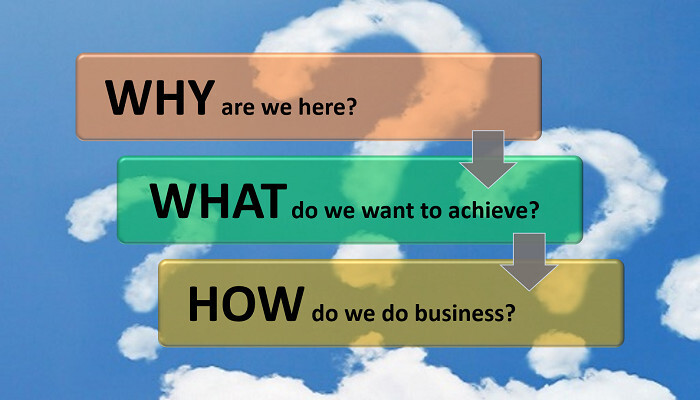
WHY
‘Why’ is probably the most important message that an organization or individual can communicate, as this is what inspires others to action. ‘Start With Why’ is how you explain your purpose and the reason you exist and behave as you do. Sinek’s theory is that successfully communicating the passion behind the ‘Why’ is a way to communicate with the listener’s limbic brain. This is the part of our anatomy that processes feelings such as trust and loyalty, as well as decision-making.
‘Why’ is a very impactful way to communicate with other humans, define your particular value proposition and inspire them to act. ‘Why’ taps into the part of the listener’s brain that influences behaviour. This is why the Golden Circle model is considered such an influential theory of leadership. At an organizational level, communicating you’re ‘Why’ is the basis of a strong value proposition that will differentiate your brand from others.
WHAT
It’s fairly easy for any leader or organization to articulate ‘What’ they do. This can be expressed as the products a company sells or the services it offers. For an individual, it would be their job title. Sinek argues that ‘What’ messaging only engages with the neocortex – the part of our brain that’s rational. His argument is that this part of the brain is less of a driver of decision making than the limbic brain: the part that ‘Why’ and ‘How’ reaches better. Successful people and organizations express why they do what they do rather than focusing on what they do.
HOW
The organization’s ‘How’ factors might include their strengths or values that they feel differentiate them from the competition. Sinek’s view is that ‘How’ messaging is also able to communicate with the limbic brain, the important part that governs behaviour and emotion. But his opinion is that organizations would do better to improve how they articulate their ‘Why’, in addition to ‘How’.

4 major connecting dots & Bobby Axelrod Character in Billions Series
CONNECTING THE DOTS
Connecting the dots is more than the game you grew up playing; it’s an increasingly important skill as you mature in your career and move into more strategic roles. People who can “connect the dots” are forward thinkers, innovators, and leaders. They have a unique ability to see the forest from the trees while simultaneously seeing the small details that may be more relevant to the big picture.
One of my favourite quotes
“You can’t connect the dots looking forward; you can only connect them looking backwards. So you must trust that the dots will somehow connect in your future.” Steve Jobs
My 4 Major Connecting Dots
Developing mind for analytical thinking: Got selected in medical but opted for computers in graduation, did half of it in India & credits got transferred to complete remaining graduation in the UK, As a student I was who used to cram most of things but education system in abroad is different to the one in India, In Abroad you complete assignments on your own with few regular classes. This is where real life begins, where getting a degree did not excite me, but using my brain, developing my mind for analytical thinking to come up with solutions for every hurdle.
Stretched hours in student jobs build up stamina for work: Working in a department store, making pizzas, working in a warehouse, putting up stuff on the shelf & many other kinds of jobs were just enough to build stamina for working long hours. Really interesting stuff was working on the weekend for some extra cash with a double shift created the habit of working on stretch for long hours.
Learning, unlearning, improving observing skill & optimism at Work: There is a saying that money doesn’t make you rich, it’s skill that makes you rich. Once you have developed the habit of learning, it compounds like anything. Numerous books & biographies related to financial markets, interaction with a lot of successful people & fund managers, experience of life, success & failure in business have made me realize that Success is not an accident. So journey started once I got detached with money because as a trader in stock market you need to focus on process rather than P&L account and focusing on improving work skills by learning then unlearning then relearning, it helped me improving my observing skills whether its related to work, finance or life that allows you to “listen” with more than just your ears and make decision better.
Perfection is the formula for frustration. Believe in implementation with probability on your side:
Perfection can drive us to unrealistic goals and expectations, and also to procrastination. You must let go of perfectionism and adopt a different view and belief about yourself—that life is for learning, and true perfection lies in always working to improve yourself, not avoiding mistakes. There is no such thing as being perfect, but you can still seek excellence. If I look last decade of my work, some of the decisions were right and some were horribly wrong, but whatever, it helped me to step out of my comfort zone & move forward. Slow decision is much worse than a wrong decision, as a wrong decision helps you learn from failures, but a delayed decision doesn’t solve no purpose. It helped me personally in my trading as trading is one business where you cannot achieve 100% accuracy & there is always room for improvement, it keeps moving you & inspires you to improve further.
Inspired by Bobby Axelrod’s character from the series Billions
One character I am very fascinated with is Bobby Axelrod in the series Billions, that showcased on Hotstar and AXN. He is portrayed as a multibillion-dollar hedge fund manager. The series shows extreme lows and highs of character. When you are working in financial markets, sometimes you have to make big decisions in split seconds. The most interesting part of the series is how he connects various dots in life with past experience to come up with a solution for every tough situation. Deep thinking, fast implementation, number crunching, negotiations, and networking were just other brainstorming techniques that really hooked me to the series.
It really helped me to pre-plan everything, whether it’s business, trading & my life & how you connect various dots of the past to come up with solutions when you are in extreme stress, because there is a saying ”no pain means no gain. You have to deep dive internally, use all skills & develop a mindset to be always optimistic & make your one life count, free from financial or other problems & make a positive impact on society by adding value to the best of your abilities, whether it’s sharing knowledge, financial resources, or anything.
#Connect
Green Hedge Capital

The secret to finding balance in your life
Time Management is Self-Management.
The bad news is that time flies. The good news is you’re the pilot.
The secret to finding balance in your life.
Helping you win the battle against wasted time.
“It’s not enough to be busy, so are the ants. The question is, what are we busy about?” – Henry David Thoreau.
The best use of your time should be on tasks that give you the best return, so one must do a time audit to set your intentions & see where your time actually goes. It’s important to recognize that the only thing slowing you down is YOU, but when we’re in control of ourselves, we can definitely unleash our full productive potential. Big, audacious goals can be great for setting your intention, but they’re terrible for your daily time management, so you should be realistic about what can be done in a day.
Therefore, learn to question your to-do list, analyze if an action is worth doing, and develop the discipline to not do it if need be. One thing all successful people have in common is that they know when to give themselves a break and when it’s time to walk away for the day. But can 10 minutes of scrolling web pages affect productivity? Yes, it can. Not only productivity, but it also depletes attention as your mind gets stuck between preoccupation and forward projection. So, discover the unseen distractions that are eating up your time and set up systems to track your daily progress.
Keep an open mind to advice on time management, but take the time to figure out your own best practices. The rule for productivity is that there are no hard and fast rules — it’s about what works for you. If you have a thought but don’t write it down, by the next morning, it may be gone forever.

Life is not a race. There is no speed by which we should live our lives.
Depending on how you look at it, every day is a fight, a struggle to keep your head above water. Life can be hard enough without all of the added pressure and judgment. There are a million and one different paths and options available for you to choose from, and we all make different choices at each junction. Life takes us all in different directions, and the results will naturally look vastly different as well. There are no wrong directions or results; there are simply ones that teach and show us different lessons.
Life is not a race. There is no speed by which we should live our lives; what matters is that we get where we want to be at some point and stay safe and happy while doing so. We each can choose to live life at the pace we desire, at the speed that works for us. Life is not a series of milestones, laid out linearly for us like hurdles in a marathon. For the most part, there is no real set order for which we must accomplish things in this life. It isn’t a math formula with strict, dictated rules.
We live a life that is full of adventure, mystery, and journey. Your own story. We make it what we want; we choose where we want to go. Life is meant to be lived on our own terms, at our own pace, in our own way. We determine the rules, the direction, and ultimately, the goal and destination. What truly matters is that we are doing what we want and getting to where we want to be. Life is about never losing hope, and it is never too late to start over or change direction if you ever feel unsatisfied with where you are.
We’ve become a society that has access to everything right here. Right now. While it seems like this is a good thing on the surface, this can lead to impatience, anxiety, and entitlement. All of these lead directly to unhappiness.
Unconscious Incompetence
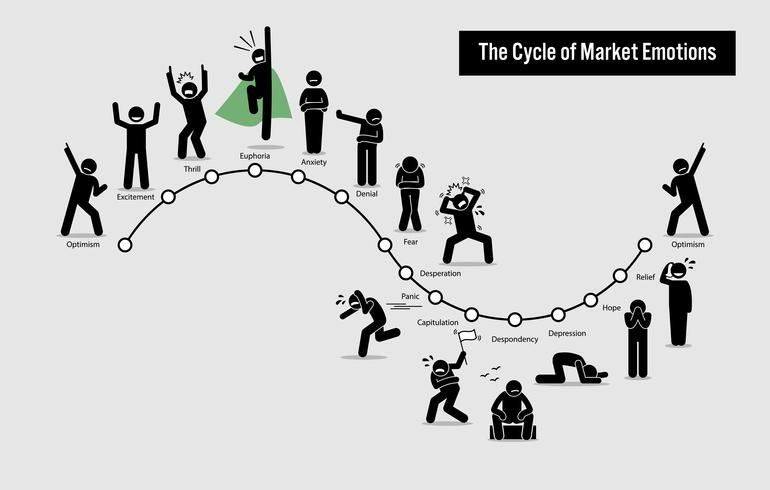
This is where most beginners start off. You heard many good things about trading and have seen many “millionaires” on social media. You start thinking to yourself, “what can be so hard?”, “price is either up or down, I can do this, but I don’t know how”. It’s a stage where you want to learn but have zero knowledge about trading.
Conscious Incompetence
Traders in this stage now understand that they need to learn. Guided by the thought that the more trading knowledge they have, the better they will be able to trade, new traders will try to put what they have learned from books, articles, DVDs, and forums into practice.
Traders in the conscious incompetence stage believe that the more trading knowledge they have, the better they will be able to trade.
The AHA Moment
A trader in this stage will begin to enter and exit the markets whenever their system tells them to, without judgment and despite the emotion they are feeling. Traders in the awakening moment will realise that successful trading comes down to the psychology of the trader and their approach to the markets.
Conscious Competence
A trader who has reached the conscious competence level will have progressed to the point where they stop trying to “pick” the winning trades. Whenever the system dictates that a position should be opened, they do so despite how the trader feels about it.
During the conscious competence stage, it still takes effort to be disciplined; however, losing trades will be easier to deal with because the trader understands it is part of their system.
Unconscious Competence
A trader is said to have reached the stage of unconscious competence once they have traded with so much practice that they can trade in an almost automatic mindset. A disciplined approach requires very little effort and has become second nature.

Money is not everything, but money is something very important.
Money is not everything, but money is something very important. Beyond the basic needs, money helps us achieve our life’s goals and supports the things we care about most enormously, that’s family, education, health, charity, adventure, and fun.
It helps us get some of life’s intangibles — freedom or independence, the opportunity to make the most of our skills and talents, the ability to choose our own course in life, and financial security. With money, much good can be done and much unnecessary suffering avoided or eliminated.
It offers peace of mind: Knowing that you have a certain amount accumulated for times of need gives you peace of mind. You can lead a stress-free life with the knowledge that you will not have to struggle if things take an unexpected turn.
It gives you a better future: Your savings can be the answer to a number of your goals. You can buy a house, accumulate funds for your retirement, or purchase a vehicle. You can secure your future, indulge in the best of things that life has to offer, and live a very fulfilling life.
It gives your family security. By saving in a disciplined manner, you can make sure that your family is well-provided for. In unfortunate times, your savings can act as a cushion for your loved ones and help them overcome any financial difficulty.
Saving money is incredibly important. It gives you peace of mind, expands your options for decisions that have a major effect on your quality, and eventually gives you the option to retire.

SACHIN BANSAL & BINNY BANSAL FLIPKART
As you may know, Flipkart is the biggest made-in-India online store selling almost everything on the Internet in India. It is one of the biggest competitors of Amazon, which is the biggest e-commerce website in the world. Flipkart is an initiative that was founded by two Indian entrepreneurs, Sachin Bansal and Binny Bansal. What started as an online bookstore from a two-bedroom apartment in Koramangala, Bengaluru, in 2007 has today grown into one of the biggest companies in India, and an incredible example of the success potential for Indian startups. Flipchart’s Success story is really an inspiring story for Indian startups.
India’s e-commerce was still a niche business, and a large population was still hesitant to shop online. However, Flipkart had built a brand of trust among its loyal customers and continued to instill confidence by providing 24×7 customer support, and their growth continued. But things were going to change drastically once Tiger Global came on board as their new partner with its first investment of $10 million in 2010.
India is now shopping online like never before, and Flipkart is the hot destination of every internet shopaholic. The master mind behind the idea, one of the first people to establish an e-commerce website in India, is Sachin Bansal, an IIT graduate and a businessman who created something of a history in the great Indian internet shopping revolution.
Sachin, who had also won the Entrepreneur Of The Year award for the year 2012-2013 for his victorious journey, has a lot of advice to give to his followers and young entrepreneurs of the country, which he often does on his personal blog. Looking at challenges as opportunities is what he thinks is the biggest asset any businessman could possess, a quality that he says has helped him with his humongous success.
Don’t start out alone; it helps to have a co-founder when things are not going your way. Perseverance and hard work is very important. The core of any business is to earn money. You have not done your job well until you find a stranger who is willing to open his/her wallet to give you money for the services/products that you a offering. The next step after that is to focus on scaling it up well.”
Binny Bansal & Sachin Bansal
With perfect planning and execution, his ideas were successfully implemented. Now, Flipkart stands as one of the biggest companies in the startup sector. Hence, his story is of great importance regarding how to implement one’s ideas.

I can’t see chaos I can only see opportunity
Few Unplanned Things
Life is not a straight line & surely it won’t be. Most of the time, we want our life to keep moving smoothly, but now & then, there are a lot of unplanned things that happen in life & what you do & how you handle those things define your way to success or failure
Stock Trading is one thing where every day something unplanned occurs, how many people have read about oil going below $0, I don’t think we have any book that has article of commodity going below zero dollar, recently a lot of traders & investors got shocked, last year when screen showed value below zero. Few Left trading forever, few started to make allegations against the government, manipulation, etc., few made excuses, whereas few people have added another lesson in their dictionary & they will be more prepared next time & moved on….
Contra Thinking
We all know about Herd Mentality, that people can be influenced by their peers to adopt certain behaviour on a largely emotional rather than rational basis. It’s a very common practice that we hear from others, we start making our own stories without any rational bias, and mostly humans are attracted towards half-empty glass rather than half-full. This is where contra thinking based on experience, skills, and rational bias helps not to follow herd mentality & find opportunity
I still remember one day in March when it was a bloodbath in the stock market as if COVID would stay forever in our lives & all businesses would be shutting down forever, but any rational man could have used the opportunity to get away from herd mentality & done value investing at some unbelievable low prices. Finally, it turned out to be one of the best ever years for investors, where markets have given amazing returns. So important to think rationally rather than emotionally during tough times.
Staying Calm in Chaos
Be calm in chaos, easier said than done. But there is a way out & this is called rational thinking & time pattern. There are a few things how hard you keep on trying, it doesn’t work, it only goes from bad to worse. But scientifically it’s proven, if you can be rational & follow a consistent time pattern, it will be helpful for you to stay calm in chaos
Whenever I face some tough situations, few things which really helps me, first one is to absorb everything rather than react, secondly keep following your time pattern for different activities, it helps to avoid overemphasize on one particular thing & thirdly most important is to find solution to problem by thinking rationally rather than emotionally. Staying calm requires skills, and it is a by-product of how you master your own emotions, perceptions, beliefs, discipline, and your own psychology.
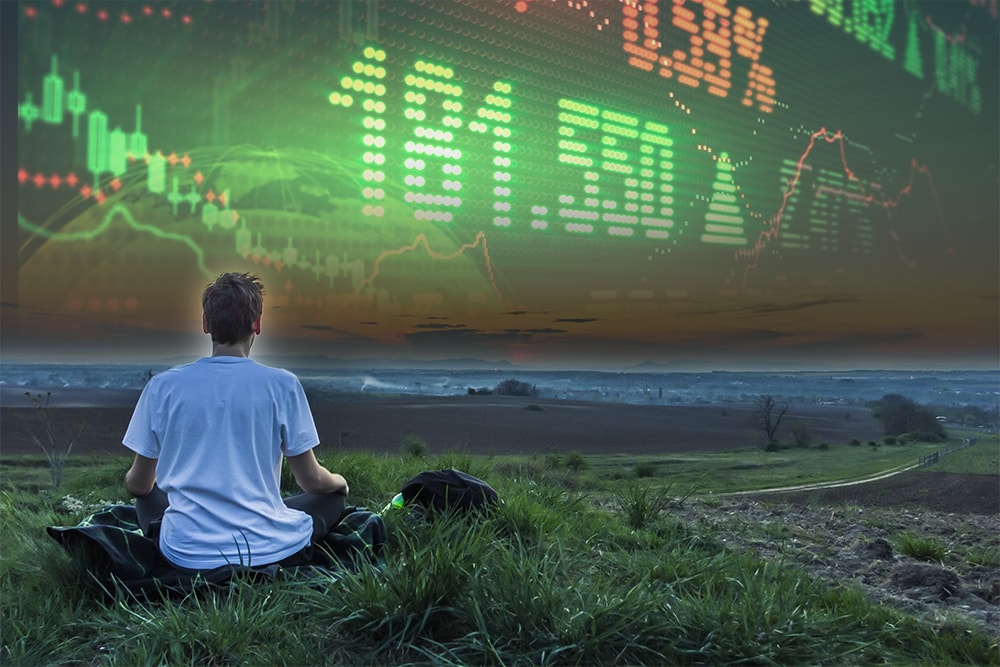
The 10 Rituals of Radiant Living
Financial markets are a very dynamic field where multiple decisions have to be made in a split second. I am trying to follow the following rituals, and honestly, even after conquering most of them, I’m still not able to get some done perfectly. These rituals really helped me in my journey as a trader & an investor, and most importantly, taking every day as an opportunity & living a life with purpose.
1. The Ritual of Solitude
Create a space in your home to turn inward and sit in silence, as sitting with yourself connects you to your creative source and releases the limitless intelligence of the Universe. The mandatory period of peace can last as little as fifteen minutes or as much as fifty, wherein you explore the healing power of silence and come to know who you really are.
2. The Ritual of Physicality
This is based on the principle that says a healthy mind lives in a healthy body. There is great power in physical care, and one should exercise at least 5 hours a week. The idea is to
Challenge your body in little increments every single day and push yourself to go farther and farther.
3. The Ritual of Live Nourishment
A poor diet has a pronounced effect on your life. Live foods are foods that are not dead – foods that are created through the natural interaction of the sun, air, soil, and water – a vegetarian diet. Fill your plate with fresh vegetables, fruits, and grains, and you might just live forever.
• Note: I think diet is a very personal choice, and I haven’t been able to implement changes on this
particular point.
4. The Ritual of Abundant Knowledge
This centers around the whole notion of lifelong learning and expanding your knowledge base for the good of yourself and all those around you. Knowledge is only potential power, though and for the power to be manifested, it must be applied. It requires that you use what you have learned in the classroom of your existence.
5. The Ritual of Personal Reflection
Personal reflection is nothing more than the habit of thinking. The problem is that most people think just enough to survive. What I am speaking about with this ritual is thinking enough to thrive. The practice of inner contemplation will make you stronger, more at ease with yourself, and wiser.
6. The Ritual of Early Awakening
Most of us sleep far more than we need to. The quality of your sleep is more important than the quantity of Sleep, as the average person needs only 6 hours of sleep to be healthy and alert. Sleep is really nothing more than a habit, and like any other habit, you will always feel a little discomfort when you are installing a new habit. But you can train yourself to wake up early for 21 days straight at 5 am.
7. The Ritual of Music
Never forget the power of music. Spend a little time with it every day, even if it is listening while you drive to work. Music adds a beautiful radiance to life and can change or enhance your mood.
8. The Ritual of Spoken Word
Research suggests you are four times more likely to accomplish your goal when accompanied by a public declaration. Yet few achievers are brave enough to put their goals out for everyone to see. I feel like declaring your goal pushes you through your comfort zone, past your fear, and creates an automatic accountability system for yourself.
9. The Ritual of Congruent Character
Simply stated, this ritual requires you to strengthen your character, which affects the way you see yourself and the actions you take. The actions you take come together to form your habits, and your habits lead you to your destiny.
• Emerson once said, “Character is higher than intellect. A great soul will be strong to live as well as to think.”
10. The Ritual of Simplicity
This ritual requires you to live a simple life. Focus only on your priorities, those activities that are truly meaningful. Your life will be uncluttered, rewarding, and exceptionally peaceful. Unless you reduce your needs, you will never be fulfilled. You will always want more than you have.
These rituals have proven to me like a miracle. And finally, the biggest takeaway from these rituals is this:
When you nourish yourself, you nourish the world.